A restaurant kitchen has many repeatable jobs: moving ingredients, measuring portions, cooking for a set time, and washing tools. Robots could take on some of that work, while people keep control of tasks that need taste, judgment, and quick changes.
The useful question is not whether a robot can cook. It is which kitchen jobs have clear steps, steady demand, and enough room for a machine to work safely.
Quick read
- Repeatable prep jobs are the easiest place to start.
- Robots need clean layouts, fixed handoff points, and regular maintenance.
- Staff may spend less time on routine work, but people will still check food, safety, and service.
Where robots fit first
A robot arm works best when the target stays in the same place and the task follows the same steps. That makes portioning, tray loading, ingredient dispensing, and drink preparation possible targets for automation.
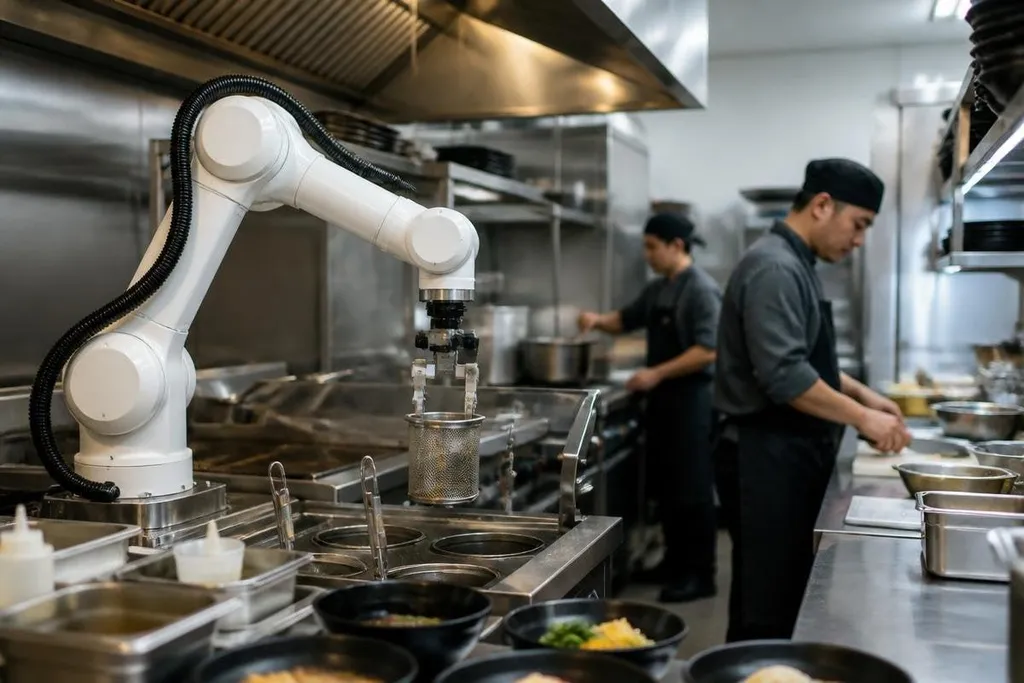
The robot needs more than an arm. It may need cameras to locate food, force sensors to detect contact, and software that tells it when to pick, place, or stop.
A gripper is the tool at the end of the arm; its shape must match the object it handles. Soft food creates a harder problem.
A sealed container has a fixed shape, while lettuce, dough, and sliced vegetables shift when touched. A system that handles one container well may still struggle with loose or wet ingredients.
That is why a kitchen robot will probably begin with a narrow task rather than a full cooking station. A narrow task gives the operator fewer failure points to watch and makes cleaning easier to plan.
What changes for kitchen staff
Automation could move staff time away from repeated motions. During a shift, a robot might place identical portions into containers while a worker checks the food, handles exceptions, and prepares orders that do not follow the normal pattern.
That shift changes the job rather than removing every human task. Someone still needs to load ingredients, clean contact surfaces, check temperatures, clear jams, and respond when an item arrives in the wrong position.
The handoff between robot and person matters. If a worker must reach across a moving arm or wait for the system to finish each small action, the robot may add delay instead of removing it. A good layout keeps people away from moving parts while leaving tools and ingredients within reach.
Restaurant automation decisions also need evidence from the machines and the people around them. Restaurant robotics reporting can connect a cooking robot’s design to its safety controls and staffing needs during daily service. Those limits matter most in a working kitchen.
The limits inside a working kitchen
Heat, grease, water, tight spaces, and frequent cleaning all affect robot design. A machine built for a dry factory floor may need different protection before it can work beside sinks, ovens, and food preparation areas.
Food safety adds another layer. Surfaces that touch ingredients need a cleaning plan, and the plan must fit the restaurant’s real schedule. A robot that takes too long to wash down can leave staff with more work during the busiest part of the day.
Reliability also means more than finishing a task once. The robot must repeat that task across a full service period, recover from small errors, and stop safely when a person enters its work area. Public demonstrations rarely answer all of those questions.
Cost matters too. The purchase price is only one part of the decision. A restaurant also needs installation, software support, spare parts, staff training, and time for maintenance. If the robot handles a task for only a few hours each day, the business may struggle to justify the full cost.
A practical test for restaurant owners
Before buying a kitchen robot, check the job rather than the machine’s marketing material:
- Record the task: count repetitions, staff minutes, delays, and errors during a normal shift.
- Map the workspace: mark hot surfaces, wet areas, walkways, storage points, and emergency stops.
- Define the handoff: state where ingredients arrive, where finished items go, and who handles exceptions.
- Set a cleaning time: include shutdown, washing, inspection, and restart in the daily plan.
- Price the full system: include installation, training, service, parts, and software fees.
- Run a limited trial: measure completed orders, stopped cycles, staff time, and food waste before expanding.
A robot earns its place when it removes a repeated task without slowing the people around it. If the job changes every few seconds, needs constant tasting, or sits in a cramped shared workspace, manual work may remain the better choice.
I'd start with one measured task, not a robot-filled kitchen. The result to watch is simple: completed orders per staff hour after cleaning, maintenance, and stopped cycles are included.